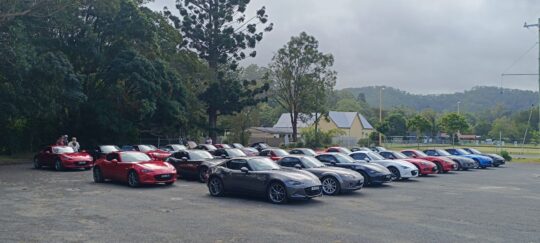
Few cars have earned the kind of reputation and loyalty as the Mazda MX-5. Since its debut in 1989, it has become the world’s best-selling two-seater sports car — but its story began well before that, with a simple idea: bring back the joy of lightweight, affordable driving.
The Idea: Reimagining the Classic Roadster
In the late 1970s and early 1980s, the traditional British roadster — once the benchmark for fun, open-top driving — had largely disappeared. Reliability issues, tightening regulations and changing market demands had left a gap in the market.
The spark for the MX-5 is often credited to a conversation between automotive journalist Bob Hall and Mazda engineers, where the idea of a modern, reliable roadster was proposed. That idea evolved within Mazda’s global design teams, with input from the company’s California studio, eventually settling on a front-engine, rear-wheel-drive layout— the classic formula for driving enjoyment.
Mazda’s guiding philosophy became “Jinba Ittai” — the idea of horse and rider as one — a concept that still defines the MX-5 today.
NA (1989–1997): The Original Icon
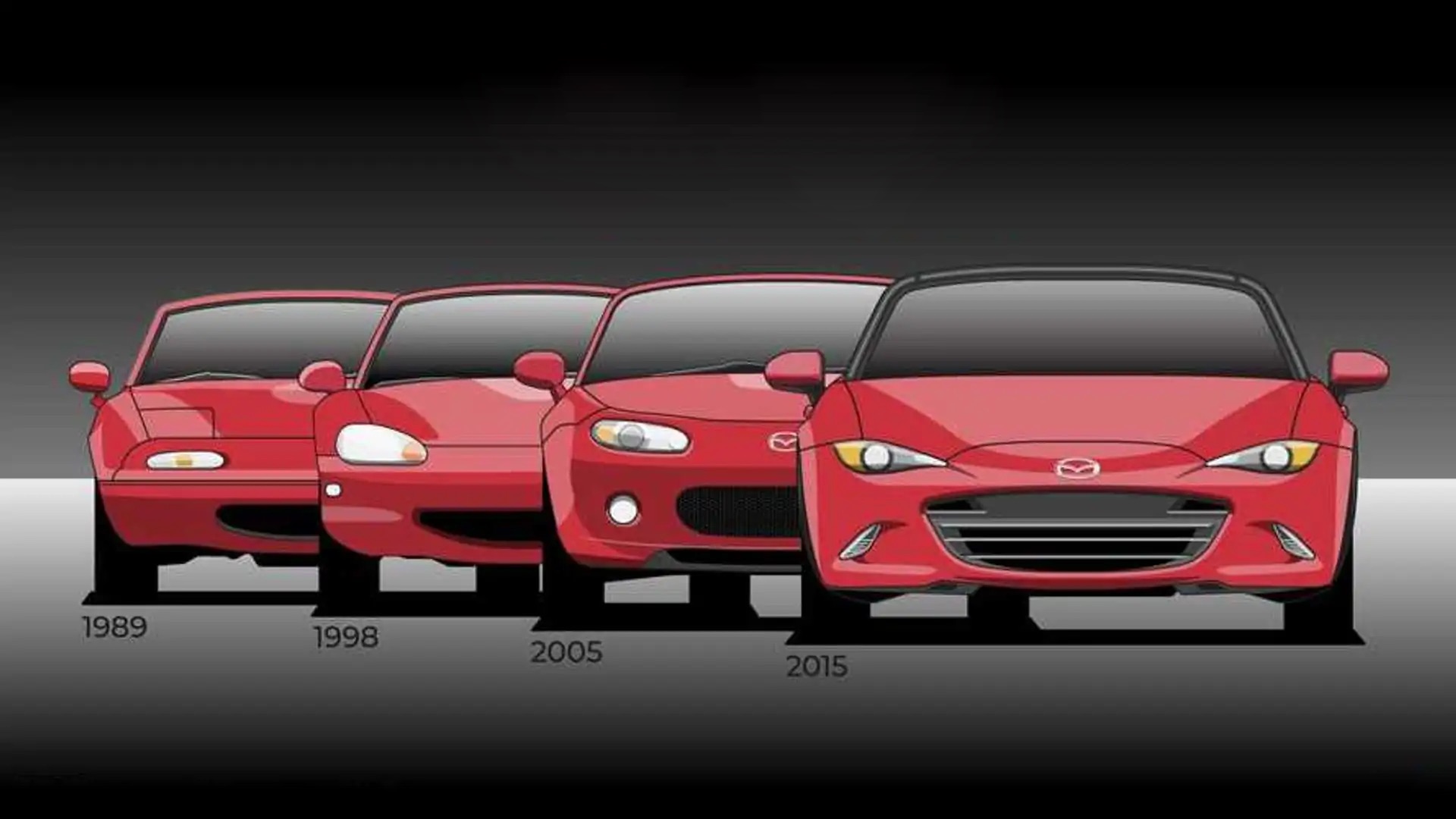
The first-generation MX-5 (NA) launched in 1989 and immediately struck a chord.
With its pop-up headlights, lightweight design and perfectly balanced chassis, it captured everything enthusiasts loved about classic roadsters — without the reliability headaches. It was simple, engaging and accessible.
Key characteristics:
- Lightweight (around 950kg)
- Rear-wheel drive balance
- Manual soft top
- Pure, analogue driving feel
Why it matters:
The NA didn’t just succeed — it revived an entire segment and set the template for every MX-5 that followed.
NB (1998–2005): Refining the Formula
The second generation (NB) built on the success of the NA, evolving the design rather than reinventing it.
Pop-up headlights were replaced with fixed units to meet modern safety regulations, and the car received chassis and performance improvements, along with a more refined interior.
Key characteristics:
- Improved rigidity and safety
- More power and better handling
- Subtle styling evolution
- Introduction of special editions (including turbo variants in some markets)
Why it matters:
The NB proved the MX-5 wasn’t a one-hit wonder — it showed Mazda could develop and improve the formula without losing its essence.
NC (2006–2015): Growing Up
The third-generation NC was the biggest shift yet. Built on a new platform, it was larger, heavier and more refined, reflecting changing expectations for comfort and safety.
It also introduced one of the most notable features in MX-5 history — the Power Retractable Hard Top (PRHT).
Key characteristics:
- Larger dimensions and improved comfort
- More powerful engines
- Optional retractable hardtop
- Greater everyday usability
Why it matters:
The NC broadened the MX-5’s appeal, making it a more practical sports car while still retaining its core driving dynamics.
ND (2015–Present): Back to the Roots
With the fourth-generation ND, Mazda returned to the original philosophy: lighter, simpler, more focused.
Weight was reduced, styling became sharper and more modern, and the driving experience was once again prioritised above all else. The ND also introduced the RF (Retractable Fastback) variant, offering a different take on open-top driving.
Key characteristics:
- Reduced weight vs NC
- Modern design with classic proportions
- Highly responsive handling
- RF model for added versatility
👉 Why it matters:
The ND is a return to form — a modern interpretation of the original MX-5 ethos, combining technology with pure driving enjoyment.
The Secret to Its Success
Across all four generations, the MX-5 has stayed true to a simple formula:
- Lightweight construction
- Rear-wheel drive balance
- Driver-focused design
- Affordability and accessibility
While the details have evolved, the core idea has never changed.
A Car Built for Drivers
More than three decades on, the MX-5 remains one of the purest driving experiences available — a car that rewards connection over power, and enjoyment over numbers.